Ever stop to think about that gentle hum coming from your kitchen? That’s the sound of your refrigerator, the unsung, 24/7 workhorse of your home. But it’s also one of the biggest energy consumers under your roof. Learning How To Use A Fridge Efficiently isn’t just about being eco-friendly; it’s a direct route to saving real money on your electricity bill and keeping your food fresher for longer. It’s a win-win-win.
So, let’s pull back the curtain on this everyday appliance. You might think you just plug it in and you’re done, but there’s an art and a science to it. We’re going to break down the simple, actionable steps you can take today to turn your energy-guzzling cold box into a lean, mean, food-preserving machine. A well-organized fridge is also easier to maintain. To get a fresh start, you might want to learn how to deep clean fridge interior before you reorganize.
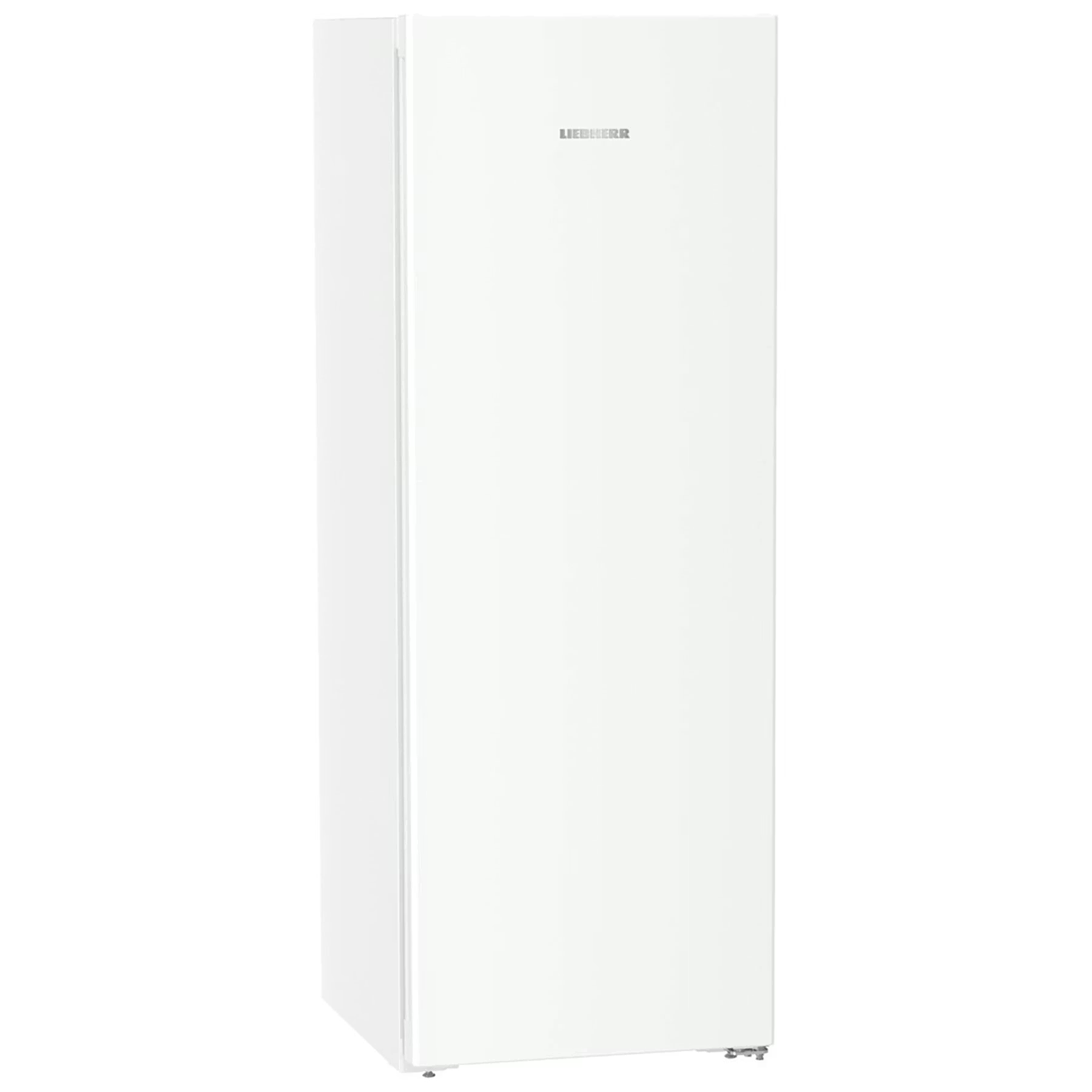
It All Starts with Location, Location, Location
Before you even think about what goes inside, let’s talk about where your fridge lives. You wouldn’t wear a winter coat in the summer, right? Your fridge feels the same way about heat.
- Keep it out of the sun: Direct sunlight forces your refrigerator’s compressor to work overtime to stay cool. Find a shady spot in your kitchen.
- Give it breathing room: Refrigerators vent heat from their condenser coils (usually on the back or bottom). If it’s crammed against a wall or boxed in by cabinets, that heat gets trapped. Aim for at least an inch of clearance on all sides and the top for proper air circulation.
- Avoid heat sources: Placing your fridge next to the oven, dishwasher, or a heating vent is a recipe for high energy bills. The external heat makes it work harder.
Master the Temperature Game: The Goldilocks Zone
Setting the right temperature is arguably the most crucial step in learning how to use a fridge efficiently. Too cold, and you’re wasting energy. Too warm, and you’re risking food safety.
What is the ideal temperature for a refrigerator?
The sweet spot for your refrigerator is between 37°F and 40°F (about 3°C to 4°C). This temperature range is cold enough to slow down the growth of bacteria like Salmonella and E. coli, but not so cold that it freezes your lettuce.
For your freezer, the magic number is 0°F (-18°C). At this temperature, food is kept safely frozen indefinitely, preserving its nutrients and flavor.
Pro Tip: Don’t just trust the built-in dial. They can be inaccurate. Invest a few bucks in an appliance thermometer to get a true reading and adjust as needed. Check it periodically, especially as the seasons change.
The Art of Smart Fridge Organization
How you stock your fridge matters more than you think. A strategically organized fridge not only helps you find things faster but also improves airflow and efficiency. The golden rule? Don’t overstuff it, but don’t leave it empty either. A fridge that’s about two-thirds full is ideal. The cold items inside help each other stay cool after the door is opened.
Here’s how to organize for maximum efficiency:
- Doors: This is the warmest part of the fridge. It’s perfect for condiments, sauces, and juices—items that are less perishable. Don’t store milk or eggs here!
- Top Shelves: The temperature here is most consistent. It’s great for leftovers, drinks, deli meats, and ready-to-eat foods.
- Bottom Shelves: This is the coldest part of the main compartment. Store your raw meat, poultry, and fish here, preferably in a sealed container or on a tray to prevent drips. This also prevents cross-contamination.
- Crisper Drawers: These are designed to maintain a specific humidity. Use one for fruits (low humidity) and the other for vegetables (high humidity). This keeps them fresh and crisp for much longer.
|
Our Picks for the Best fridge in 2026
As an Amazon Associate, we earn from qualifying purchases.
|
||
| Num | Product | Action |
|---|---|---|
| 1 | RCA RFR321-B-Black-COM RFR321 Single Mini Refrigerator-Freezer Compartment-Adjustable Thermostat Control-Reversible Doors-Ideal for Dorm, Office, RV, Garage, Apartment-Black Cubic Feet, 3.2 CU.FT |

|
| 2 | Whynter 95 Qt. Wheeled Portable Refrigerator / Portable Freezer for Travel - Chest Freezer / Fridge for Car, Camping, RVs & More, -8°F to 50°F Temperature Range, AC 110V/ DC 12V, FM-951GW, Gray |
|
| 3 | GE GPV10FGNBB 24\\\\\\\" Top Freezer Refrigerator with 9.93 cu. ft. Capacity 12V DC Power Only LED Lighting and Adjustable Spillproof Glass Shelves in Black |
|
| 4 | FRIGIDAIRE EFR372-BLUE 3.2 Cu Ft Blue Retro Compact Rounded Corner Premium Mini Fridge |
|
| 5 | ARCTIC CHEF Mini Refrigerator-Freezer Compartment-Adjustable Thermostat Control-Reversible Doors-Ideal for Dorm, Office, RV, Garage, Apartment-ORANGE, 3.2 CU.FT |
|
| 6 | BANGSON Mini Fridge with Freezer, 2 Door Small Refrigerator with Freezer, Small Fridge for Bedroom, 3.2 CU.FT, For Home, Office, Dorm, Garage or RV, White |
|
| 7 | ACFR321White Mini Fridge Compact Refrigerator, 3.2 Cu Ft, White |
|
| 8 | ACFR322 RCA Mini Refrigerator, Compact Freezer Compartment, Adjustable Thermostat Control, Reversible Door, Ideal Fridge for Dorm, Office, Apartment, Platinum Stainless, 3.2 Cubic Feet |
|
| 9 | Frigidaire Retro Compact Refrigerator with Chiller, 3.2 cu ft Countertop Fridge, Built-In Bottle Opener, Rounded Corners, Premium, for Office, Bedroom, Dorm Room, Cabin, 18.5D x 20W x 31.5H (Pink) |
|
| 10 | Frigidaire Retro Compact Fridge with Chiller, 3.2 cu ft Countertop Fridge with Built-In Bottle Opener, Compact Refrigerator for Office, Bedroom, Dorm Room or Cabin - 16.5\\\\\\\"D x 19\\\\\\\"W x 31\\\\\\\"H (Red) |
|
Simple Habits for Big Savings
Small changes in your daily routine can add up to significant energy savings.
- Cool food down first: Never put hot food directly into the fridge. It raises the internal temperature, forcing the compressor to go into overdrive. Let leftovers cool on the counter for a bit (but no more than two hours) before storing them.
- Cover your liquids: Uncovered liquids and foods release moisture, which makes the compressor work harder to remove it. Cover everything to maintain a stable internal environment.
- Think before you open: Know what you want before you open the door. Each time you do, up to 30% of the cold air escapes, and your fridge has to work to cool it back down.
- Check the door seals: A leaky seal is a major energy drain. Try the “dollar bill test”: close the door on a dollar bill. If you can pull it out easily, your seal (or gasket) might need to be cleaned or replaced.
Essential Maintenance for Peak Performance
Your fridge is an appliance that needs a little TLC to run its best. These simple maintenance steps are crucial. For a complete guide on this topic, understanding how to extend life of fridge will give you even more tools to protect your investment.
Clean Those Condenser Coils
This is the single most important maintenance task. The coils are responsible for releasing heat from the fridge. When they’re covered in dust, pet hair, and grime, they can’t do their job efficiently.
According to David Chen, a certified appliance repair technician with 15 years of experience, “I’ve seen energy consumption drop by as much as 15% just from a thorough coil cleaning. It’s like trying to breathe with a pillow over your face—the fridge has to work so much harder when the coils are clogged. Do it once or twice a year, and your fridge and your wallet will thank you.”
To clean them, simply unplug the fridge, locate the coils (usually on the back or underneath), and use a vacuum cleaner with a brush attachment to gently remove all the debris.
Defrost When Necessary
If you have an older model without an automatic defrost function, don’t let the ice build up. More than a quarter-inch of ice buildup acts as an insulator, making your freezer much less efficient. Unplug it, empty it, and let the ice melt.
Frequently Asked Questions (FAQ)
How much electricity does a modern fridge use?
A modern, Energy Star certified refrigerator typically uses between 300 and 600 kWh per year. This is a massive improvement over models from 20 years ago, which could easily use over 1,500 kWh annually. Efficient usage can push your consumption to the lower end of that range.
Does an empty fridge use more electricity?
It’s a common myth. An empty fridge actually cools down faster. However, a well-stocked fridge (about 2/3 full) is more efficient at maintaining its temperature. The cold items act as thermal batteries, helping to keep the temperature stable when the door is opened.
How often should I clean my fridge coils?
A good rule of thumb is to clean the condenser coils every six to twelve months. If you have pets that shed or live in a dusty environment, you might want to check and clean them more frequently, perhaps every three to four months.
Is it cheaper to repair or replace an old, inefficient fridge?
If your refrigerator is more than 10-15 years old, it’s often more cost-effective in the long run to replace it. The energy savings from a new Energy Star model can be so significant that it pays for itself over its lifespan. For newer models, a simple repair like replacing a door gasket is usually worth it.
Can I put my refrigerator in the garage?
It’s generally not recommended, especially in climates with extreme temperatures. Most refrigerators are designed to operate within a specific ambient temperature range (typically 60°F to 90°F). In a hot garage, it will run constantly, and in a cold garage, it may shut off entirely, causing your freezer to thaw.
Conclusion: Your Fridge, Your Savings
Mastering how to use a fridge efficiently is about more than just a few random tips; it’s about adopting a smarter approach to one of your home’s hardest-working appliances. By being mindful of its placement, temperature, organization, and maintenance, you’re not just cutting down your energy bill—you’re extending the life of your appliance, reducing food waste, and making a positive impact on the environment. Take a few of these steps today, and watch the savings add up. What are your favorite tricks for keeping your fridge running smoothly?